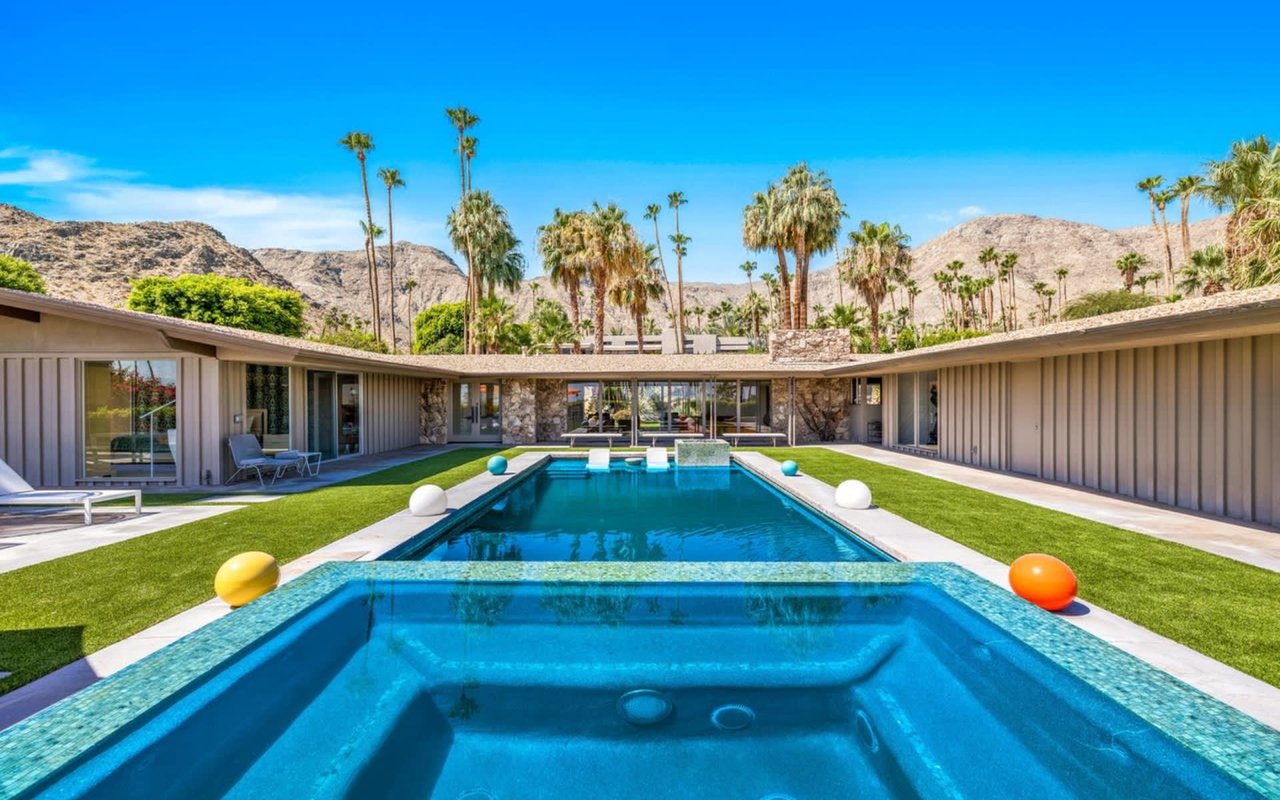
A listing agent describes an Indian Wells home as "turnkey income producing," complete with a rental history, an active booking calendar, and a business license number printed right on the flyer. A buyer touring the property assumes that license transfers the way the pool equipment or the kitchen appliances do. It does not. Under the city's own municipal code, a short-term rental permit in Indian Wells is void the moment the property changes hands, and the city requires that fact to be spelled out in the sale contract itself.
That single clause reshapes how a buyer should read every "rental ready" listing in the city, and it is the detail most write-ups on Indian Wells investing skip entirely.
The Clause Every Contract Has to Include
Section 5.20.240 of the Indian Wells municipal code requires a specific disclosure in any agreement to sell real property in the city. The buyer must acknowledge in writing that the city regulates short-term rentals, defined as any stay under 30 days, and that continuing to operate the home as one requires a new application, not an assumption of the seller's existing permit. This is not boilerplate pulled from a generic California disclosure packet. The city requires this language to disclose its rule that permits are void on sale.
The practical effect is that a seller's monthly rental income, occupancy rate, or five-star reviews are marketing material, not a transferable asset. A buyer is purchasing a house that once operated as a licensed rental. They are not purchasing the license.
What "Void on Sale" Actually Means for Your Offer
Once escrow closes, the new owner starts from zero on compliance. That means complying with the city's requirements before reopening the calendar. In the meantime, the home cannot be rented under 30 days, regardless of what the previous owner's booking platform shows as available.
This matters most for two kinds of buyers. The first is someone financing the purchase partly on projected rental income, since that income has a gap between closing and a new permit being issued. The second is anyone assuming the seller's grandfathered status carries forward. It does not, and the City of Indian Wells says permits issued under the original 2015 program are permanently expired, with no path to reinstatement.
The Rule Nobody Mentions: One Permit, One Person, Citywide
Buried in the same chapter is a restriction that rarely makes it into an investor's first read of the ordinance. The city prohibits any person from holding more than one short-term rental permit within Indian Wells at a time. If an investor already owns one licensed rental in Indian Wells and is considering a second property near the Tennis Garden, the ordinance does not allow a second permit under that same name
For someone building a small portfolio of desert rentals, this is the kind of rule that only shows up once you are already deep into a purchase. It is worth confirming before, not after, an offer is written, since it can change whether a second Indian Wells property makes sense as a rental at all versus as a seasonal or long-term lease.
Where the Zoning Actually Draws the Line
A common assumption, repeated across several vacation rental management sites, is that Indian Wells restricts short-term rentals to a narrow ring of properties close to the Tennis Garden and the Golf Resort. The actual code draws the line differently. Short-term residential rentals are permitted in the city's very low density, low density, medium density, and medium high density residential zoning designations, which is a zoning classification, not a proximity radius to any single landmark. A property's eligibility depends on how the parcel is zoned under the General Plan, not on how close it sits to a tournament venue.
That distinction matters during due diligence. Two homes a few blocks apart can carry different zoning designations and, as a result, different rental eligibility, even if both are an equal walk from the Tennis Garden gates.
| Permit type | Minimum stay | When it applies |
|---|---|---|
| Standard (new) permit | 29 consecutive nights | Year-round, outside the tournament window |
| Tournament-window permit | 7 consecutive nights | One week before through three days after the annual BNP Paribas Open at the Indian Wells Tennis Garden |
| Unrestricted (legacy) permit | No 29-night minimum | Not available; permits issued under the original 2015 program are permanently expired |
The HOA Layer Runs on Its Own Track
Even where city zoning allows a rental, the homeowners association or master association governing the property can add its own limits. The one exception the city explicitly grants an HOA is the ability to opt out of the 29-night minimum stay rule, using a formal opt-out letter and map on file with the city. That opt-out does not touch anything else. The transient occupancy tax, currently 12.25 percent and remitted quarterly, still applies. The noise ordinance, which prohibits disturbing sound between 10 p.m. and 7 a.m., still applies.
In other words, an HOA can shorten the minimum stay for its members, but it cannot exempt anyone from the rest of the ordinance. A buyer evaluating a condo or club home should ask the HOA directly whether it has filed an opt-out, and should not assume that a shorter minimum stay quoted by a seller reflects the full picture of what the city still requires.
Building the Contingency Into Your Offer
For a buyer seriously considering an Indian Wells property with existing rental activity, a few specific requests during escrow do more work than a general assumption that "the numbers will carry over."
- Ask the seller for the current short-term rental license number and confirm its status directly with the city rather than relying on a listing description.
- Request the HOA's opt-out documentation, if any, in writing, along with confirmation of which zoning designation applies to the parcel.
- Build a permit-verification contingency into the purchase agreement.
- Confirm whether you already hold a short-term rental permit elsewhere in the city, given the one-permit-per-person restriction.
- Review the seller's TOT remittance history if available, since a pattern of late filings can signal broader compliance issues with the property.
None of this requires assuming bad faith on the seller's part. It simply reflects how the ordinance is written, and how little of it survives a change in ownership by default.
A Few Questions Worth Asking Early
Does an existing rental license guarantee a new owner's application will be approved? No. The permit is void on sale.
Can I rent for less than 29 nights outside the tournament window if my HOA allows it? Only if your HOA has filed a formal opt-out with the city covering the minimum-stay rule specifically. Every other part of the ordinance, including TOT and noise, still applies regardless of the HOA's position.
Is the 2015 grandfathered exemption something I can still claim? No. Those permits are permanently expired under the current ordinance, and there is no reinstatement path for a new owner or a new application.
Indian Wells rewards careful reading more than most desert cities, precisely because its rules are specific rather than generic. A rental permit here is non-transferable, not a feature of the house. Reading a listing's income figures as a starting point for your own application, rather than as a number that simply continues under your name, is the difference between a smooth escrow and a rental gap nobody budgeted for.
If you are weighing a rental-minded purchase in Indian Wells, or want a second opinion on how a specific property's zoning and HOA documents line up with the city's ordinance, Team Armstrong can walk through the paperwork with you before you write an offer. Contact Us to start that conversation.
This article is general information, not legal, tax or financial advice. Consult a qualified professional about your situation.