By Team Armstrong
If the garage has become the place where everything goes when there's nowhere else to put it, you're not alone. For many homeowners, the garage serves as a catch-all for sports equipment, seasonal décor, tools, and the occasional piece of furniture that hasn't found a permanent home yet. The result is a space that's technically yours but practically unusable.
The good news is that organizing a garage doesn't require a full renovation or a massive budget. What it does require is a clear plan, the right systems, and a willingness to make decisions about what actually belongs in the space. Whether you're prepping your home for the market or simply want to reclaim one of the most valuable square feet in your house, a well-organized garage signals care and intention to everyone who sees it.
In the desert, where garages often double as storage for outdoor entertaining gear, golf bags, and temperature-sensitive items that can't survive the heat outside, getting this space right matters even more. This guide will walk you through everything you need to know to organize your garage with thoroughness and efficiency.
Key Takeaways
- Decluttering before you organize is the single most important step, and doing so systematically prevents you from simply moving the mess around.
- Vertical wall space is the most underutilized asset in most garages; using it correctly can double your usable storage.
- Zones that reflect how you actually use your garage make maintaining the space far easier over time.
- In the Coachella Valley climate, heat-safe storage solutions and material choices matter more than they would in cooler regions.
- A well-organized garage adds real perceived value to your home, whether or not you're planning to sell.
Start With a Full Declutter Before You Touch a Single Shelf
The most common mistake people make when organizing a garage is skipping the declutter phase entirely. They buy bins, install shelving, and then fill those shelves with items they don't actually need. A few months later, the garage looks exactly the same. Before any system can work, you need to know what you're actually keeping.
Pull everything out of the garage completely. Yes, everything. This step feels overwhelming, but it's the only way to take an honest inventory of what you have. Once it's all out, group items by category: tools, sporting goods, garden supplies, holiday décor, automotive items, and anything else with a theme. You'll quickly see what you have multiples of, what you forgot you owned, and what genuinely has no business being there anymore.
Use a simple three-category system as you sort: keep, donate, and discard. Be honest about what you actually use. The kayak you haven't touched in four years, the broken power drill, or the box of newspapers from 1999 can probably go. Making those calls now is the foundation that makes everything else possible.
Pull everything out of the garage completely. Yes, everything. This step feels overwhelming, but it's the only way to take an honest inventory of what you have. Once it's all out, group items by category: tools, sporting goods, garden supplies, holiday décor, automotive items, and anything else with a theme. You'll quickly see what you have multiples of, what you forgot you owned, and what genuinely has no business being there anymore.
Use a simple three-category system as you sort: keep, donate, and discard. Be honest about what you actually use. The kayak you haven't touched in four years, the broken power drill, or the box of newspapers from 1999 can probably go. Making those calls now is the foundation that makes everything else possible.
Questions To Ask Yourself as You Sort
- Have I used this item in the past two years?
- If I needed this, would I know where to find it right now?
- Does this belong in the garage, or does it belong somewhere else in the house?
- Is this in good enough condition to be worth keeping?
- Would I buy this again if I saw it at a store today?
Make the Most of Vertical Wall Space
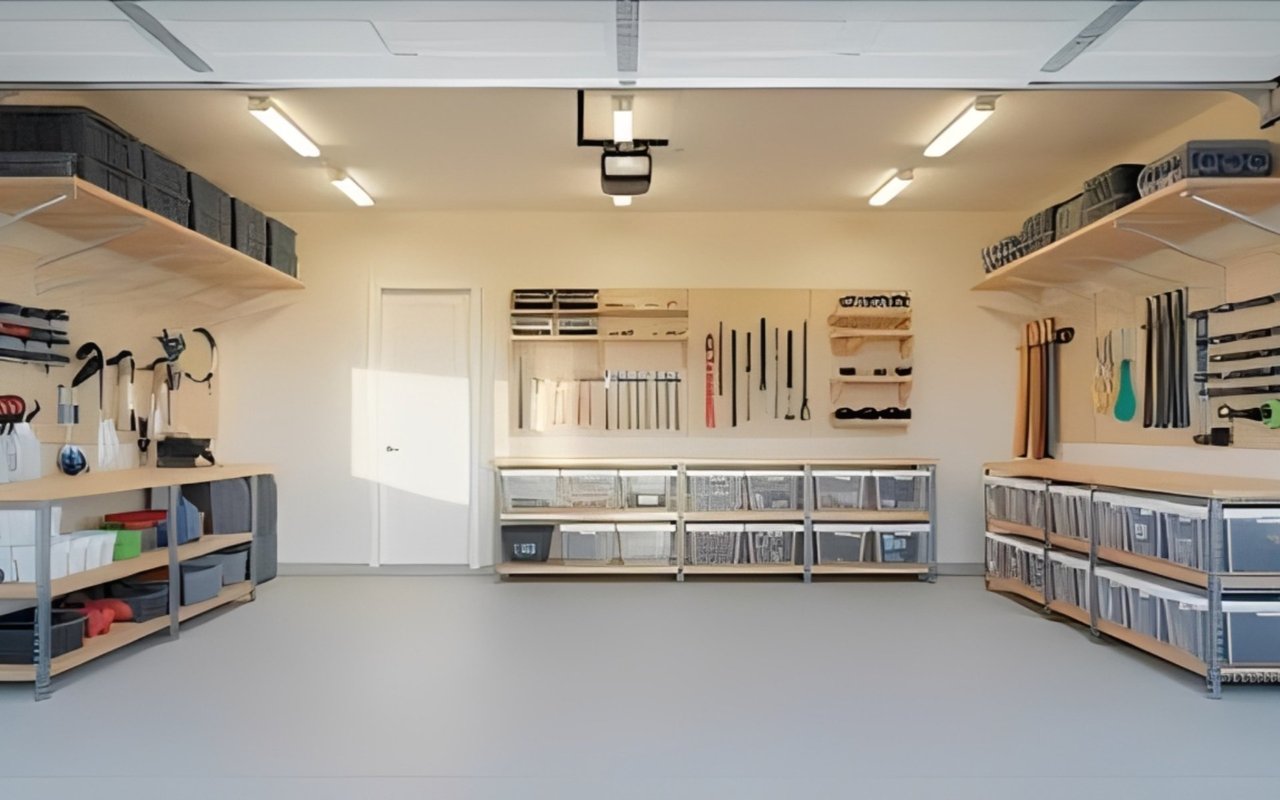
Once the floor is clear and you know what you're keeping, it's time to think about storage architecture. The floor of a garage is premium real estate; your goal should be to keep as much of it open as possible by moving storage up the walls. Most two-car garages have eight or more feet of vertical wall space that goes almost entirely unused.
Wall-mounted track systems are one of the most flexible and effective solutions available. These systems allow you to attach hooks, baskets, shelves, and bins that can be repositioned as your needs change. They're especially useful for hanging bikes, garden hoses, rakes, brooms, and anything long and awkward that tends to take up floor space. Pegboards work well for hand tools and smaller items you want visible and within reach.
Overhead storage platforms are another excellent option. These ceiling-mounted racks are ideal for items that you access infrequently, such as holiday decorations, luggage, or off-season sporting equipment. Just be sure the ceiling height allows for it, and keep the weight limits of your particular system in mind.
Wall-mounted track systems are one of the most flexible and effective solutions available. These systems allow you to attach hooks, baskets, shelves, and bins that can be repositioned as your needs change. They're especially useful for hanging bikes, garden hoses, rakes, brooms, and anything long and awkward that tends to take up floor space. Pegboards work well for hand tools and smaller items you want visible and within reach.
Overhead storage platforms are another excellent option. These ceiling-mounted racks are ideal for items that you access infrequently, such as holiday decorations, luggage, or off-season sporting equipment. Just be sure the ceiling height allows for it, and keep the weight limits of your particular system in mind.
Storage Solutions Worth Considering
- Slatwall panels, which accept a wide variety of attachments and look clean and finished.
- Freestanding metal shelving units, which are adjustable and hold heavier items.
- Magnetic tool strips, mounted near a workbench for quick access to frequently used hand tools.
- Enclosed base cabinets for items you want out of sight or protected from dust.
- Clear stackable bins labeled by category so that you can find what you need without unpacking everything.
Create Zones That Reflect How You Actually Use the Space
A garage organized by zones is far easier to maintain than one where items are placed wherever they fit. Think of zones as dedicated neighborhoods within the garage, each with a clear purpose that reflects your actual habits and activities.
Start by identifying your categories: automotive (oil, jumper cables, car care supplies), garden and outdoor (irrigation tools, fertilizer, potting supplies), sports and recreation (golf bags, tennis rackets, bicycles), workshop (power tools, hardware, lumber scraps), and household overflow (cleaning supplies, paper goods, extra pantry items). Each category gets its own dedicated zone, and items within that zone are stored close to each other.
In the Coachella Valley, it's worth adding a dedicated zone for outdoor entertaining gear. Many homeowners here keep folding chairs, umbrellas, outdoor lighting, and pool supplies in the garage between uses. Giving these items their own clearly defined home prevents them from spreading across the entire space and makes setup and breakdown for entertaining much faster.
Start by identifying your categories: automotive (oil, jumper cables, car care supplies), garden and outdoor (irrigation tools, fertilizer, potting supplies), sports and recreation (golf bags, tennis rackets, bicycles), workshop (power tools, hardware, lumber scraps), and household overflow (cleaning supplies, paper goods, extra pantry items). Each category gets its own dedicated zone, and items within that zone are stored close to each other.
In the Coachella Valley, it's worth adding a dedicated zone for outdoor entertaining gear. Many homeowners here keep folding chairs, umbrellas, outdoor lighting, and pool supplies in the garage between uses. Giving these items their own clearly defined home prevents them from spreading across the entire space and makes setup and breakdown for entertaining much faster.
Tips for Effective Zone Planning
- Place frequently used zones near the garage door for the easiest access.
- Keep automotive items near the front of the garage where the car is parked.
- Store seasonal items, such as holiday décor and winter camping gear, in the back or overhead.
- Keep a small trash bin in the garage so debris doesn't accumulate on the floor.
Choose Materials and Storage Products With the Desert Climate in Mind
Palm Springs and the Coachella Valley present a unique storage challenge: extreme summer heat. Temperatures inside a non-climate-controlled garage can climb during peak summer months, which affects what types of materials and products you should use.
Avoid cardboard boxes if possible. They break down quickly in heat and humidity fluctuations, attract pests, and don't protect contents from temperature extremes. Plastic bins with secure lids are a much better choice, particularly for holiday décor, fabric items, and anything that could be damaged by heat or moisture. Look for bins rated for outdoor or extreme temperature use when possible.
Metal shelving holds up far better than particleboard or MDF-based shelving, which can warp or delaminate in high-heat environments. For wall-mounted systems, powder-coated steel is a durable choice that holds up well over time. If you have any items that are sensitive to heat, such as certain paints, batteries, or aerosols, consider whether the garage is actually the right storage location for them.
Avoid cardboard boxes if possible. They break down quickly in heat and humidity fluctuations, attract pests, and don't protect contents from temperature extremes. Plastic bins with secure lids are a much better choice, particularly for holiday décor, fabric items, and anything that could be damaged by heat or moisture. Look for bins rated for outdoor or extreme temperature use when possible.
Metal shelving holds up far better than particleboard or MDF-based shelving, which can warp or delaminate in high-heat environments. For wall-mounted systems, powder-coated steel is a durable choice that holds up well over time. If you have any items that are sensitive to heat, such as certain paints, batteries, or aerosols, consider whether the garage is actually the right storage location for them.
Products To Avoid in High-Heat Garages
- Cardboard boxes of any kind, which can degrade and attract pests.
- Particleboard or MDF shelving, which warps in extreme heat.
- Rubber-coated bins that become sticky or malformed in sustained high temperatures.
- Standard clear plastic bins not rated for temperature extremes, which can crack or discolor.
- Exposed wood shelving without a protective finish, which can dry out and split over time.
FAQs
How Long Does It Take To Organize a Garage?
For most average-sized two-car garages, a full organization project takes one to two full weekends. The decluttering phase is usually the most time-consuming part. If you plan to install shelving or a wall track system, factor in an additional half-day for installation. Breaking the project into phases, starting with decluttering and then moving to installation, makes it more manageable.
What's the Best Way To Store Golf Bags and Sports Equipment in a Garage?
Wall-mounted hooks and specialty racks designed for golf bags keep them upright, protected, and out of the way. For other sports equipment, such as tennis rackets, balls, and helmets, a designated bin or open shelving unit in a sports zone keeps everything visible and easy to grab. The key is giving each type of equipment its own clearly defined spot so that it always has a home to return to.
Will an Organized Garage Add Value to My Home?
An organized, functional garage makes a great impression on buyers and supports the overall perception of how well a home has been maintained. It doesn't add square footage, but it does demonstrate that the space has been cared for and thoughtfully used. In a competitive market, details like this contribute to how quickly a home sells and how offers come in.
How Do I Keep the Garage Organized After the Initial Effort?
The biggest factor in maintaining an organized garage is having a system where everything has a specific place. When items have a home, it's easy to put them away. When they don't, they pile up on the floor. Scheduling a quick seasonal reset, perhaps at the start of spring and fall, helps catch any drift.
Your Garage Deserves the Same Attention as the Rest of Your Home
A well-organized garage is more than a storage win; it's a reflection of how intentionally you've approached your home as a whole. When the space works the way it's supposed to, it supports your lifestyle rather than complicating it. And when it comes time to sell, buyers notice.
Whether you're working with a sprawling four-car garage in Rancho Mirage, a single-car space in La Quinta, or something in between across the Coachella Valley, the same principles apply: start with a clear plan, work vertically, build zones, and choose materials built to last in the desert heat.
When you're ready to take the next step with your home sale, we are here to help. Team Armstrong works with homeowners throughout Palm Springs, Palm Desert, Rancho Mirage, La Quinta, and across the Coachella Valley to make sure every aspect of your property is positioned to shine. Reach out to us today.
Whether you're working with a sprawling four-car garage in Rancho Mirage, a single-car space in La Quinta, or something in between across the Coachella Valley, the same principles apply: start with a clear plan, work vertically, build zones, and choose materials built to last in the desert heat.
When you're ready to take the next step with your home sale, we are here to help. Team Armstrong works with homeowners throughout Palm Springs, Palm Desert, Rancho Mirage, La Quinta, and across the Coachella Valley to make sure every aspect of your property is positioned to shine. Reach out to us today.